
” My Life Journey “ – The Beginning of a Spiritual Path
I was born in Hungary during the communist era, into a family and a society where physical labour was valued far more highly than intellectual knowledge or spiritual understanding. This attitude was deeply rooted in the prevailing mentality of the country at that time, shaping both my upbringing and the educational opportunities available to me.
Growing up in such an environment, I followed the conventional path laid out before me. I completed my primary and secondary education and subsequently attended a vocational school specialising in catering.
Yet, beneath the surface of this seemingly ordinary life, there was a deep and persistent longing within me—a yearning for wisdom, truth, and a deeper understanding of existence.
“By God’s grace”, this inner longing gradually opened doors to the profound spiritual traditions of the East. I was fortunate to encounter the teachings of remarkable spiritual masters relatively early in my life.
In 1989, I was introduced to the teachings of the Buddha through a Japanese Zen master by BUKKYO DENDO KOKAI.
This encounter marked an important turning point in my spiritual journey. Around the same period, I also discovered the I Ching (The Book of Changes), whose timeless wisdom offered me another perspective on the nature of life, transformation, and the deeper order of existence.
As my spiritual curiosity deepened, I immersed myself in the teachings of those widely regarded as enlightened spiritual teachers, including Sri Nisargadatta Maharaj, Dr. David R. Hawkins, and Adyashanti. Through reading their works and listening to their teachings, I gradually became acquainted with profound insights into consciousness, self-realisation, and the nature of ultimate reality.
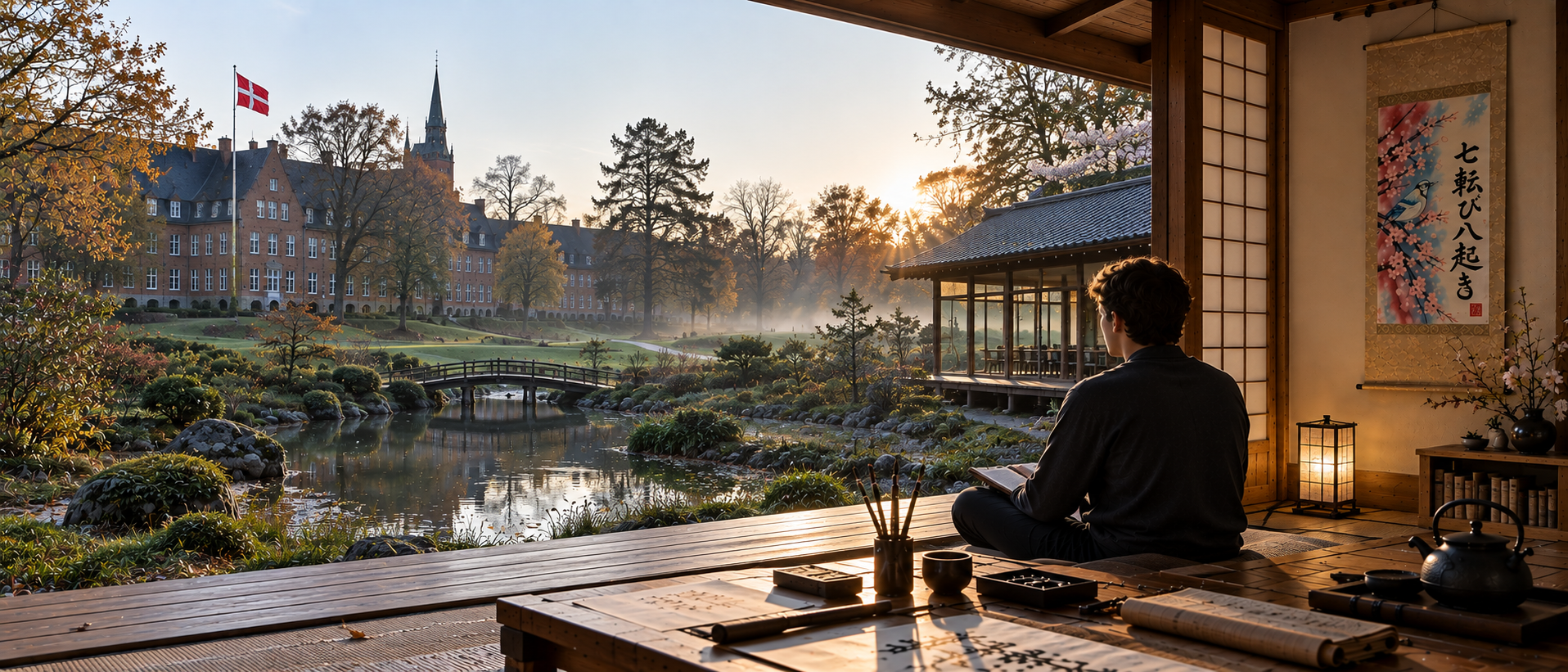
Another significant chapter of my journey unfolded in Denmark, where I spent six months at a Japanese boarding school dedicated to the study and practice of traditional Japanese culture in 1999.
During this period, I had the opportunity to explore various aspects of Japan’s rich cultural and spiritual heritage, including Zen Buddhism, architecture, calligraphy, cinema, and ikebana—the traditional Japanese art of flower arrangement.
This experience broadened my understanding of Japanese culture and deepened my appreciation of the intimate relationship between spirituality, artistic expression, simplicity, and everyday life.
Looking back, I recognise that these encounters were far more than isolated educational experiences. They were essential steps along an unfolding inner journey—one that began with a longing for wisdom and gradually became a lifelong exploration of consciousness, truth, and the deeper meaning of human existence.